Tuesday, April 7, 2015

Dental Fluorosis report of community of Presa Allende

This document provides documentary evidence of the health effects; on a number inhabitants of the community in Presa Allende, of consuming fluoride contaminated water, 


View the dental fluorosis report here by Norman R. Feldstein D.M.D.

Despite the anomaly in current levels of fluoride testing below the maximum threshold of 1.5mg/l (most likely explained by the unusually high levels of rainfall this season, possibly diluting the levels of fluoride present in the artesenal wells), this report serves to explain the evident need for safe drinking water in this community.


Wednesday, March 4, 2015

Closing Ceremony – La Banda and Montecillo de Nieto

Today we traveled over the hill and through the woods (fording a river long the way) to enjoy the closing celebration for our La Banda and Montecillo de Nieto project. 

We are joined this week by representatives of the Lotus Foundation who provided significant funding to these projects and also to our previous project at Ex-Hacienda de Pena Blanca. Mark and Margaret are here and they have brought along the president of the board of Lotus, John, and Eric who is also a board member. Yesterday they were able to see the construction of a pilot cistern at Vivienda Urbano after having a presentation at our weekly Rotary meeting from Dr. Adrian Ortega, the absolute guru and expert on our Independence Aquifer and its problems.

Alejandro, Ivar, David H, Tom and Sara also came from Rotary San Miguel Midday. We brought a few other visitors with us that wanted to see in person our water harvesting projects. We arrived early enough so that we could go see five of the new cisterns … moving our group along from stop to stop was a bit like herding cats but ultimately we were able to do this. John and Eric from Lotus had many good questions and observations.

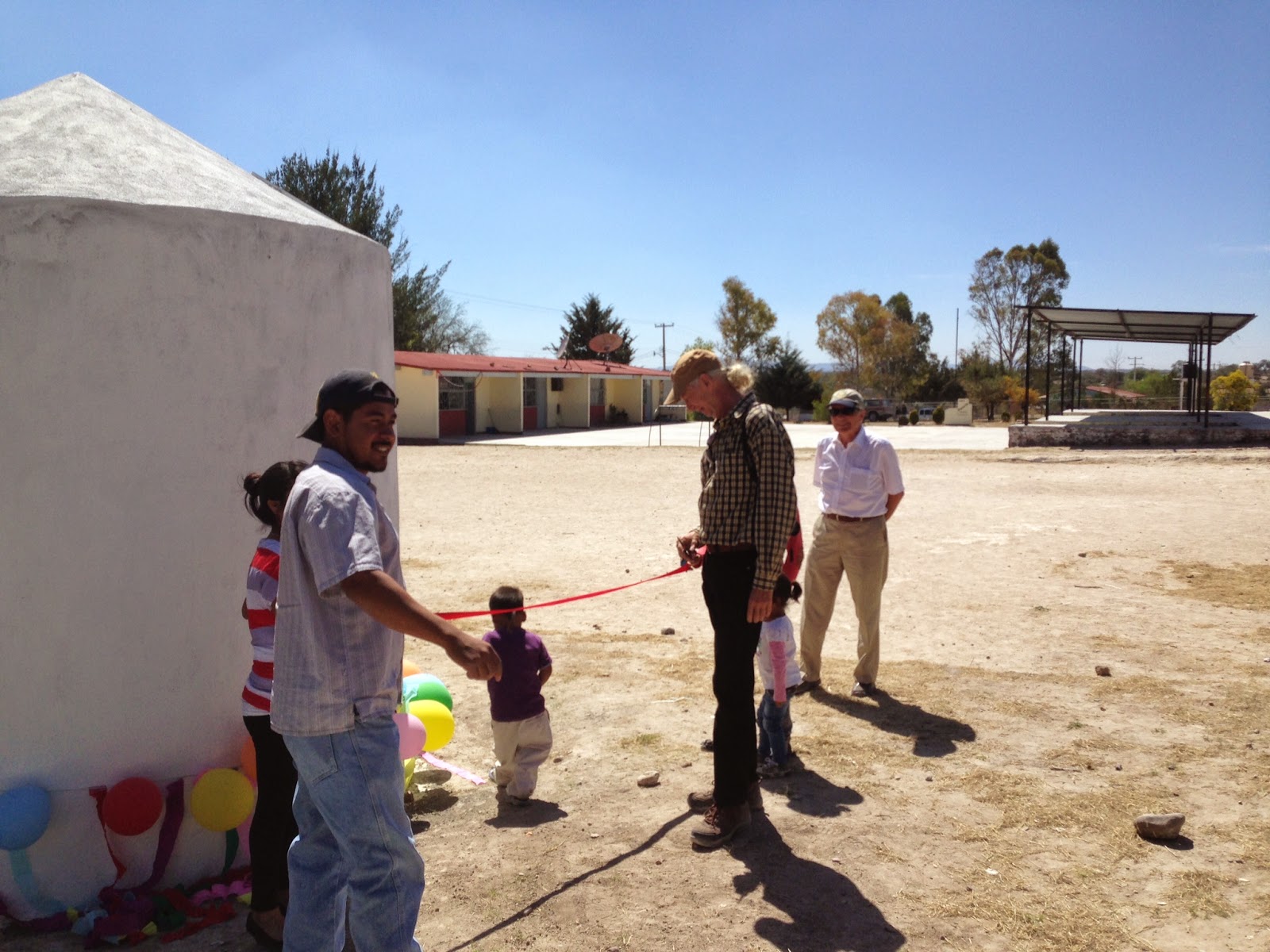
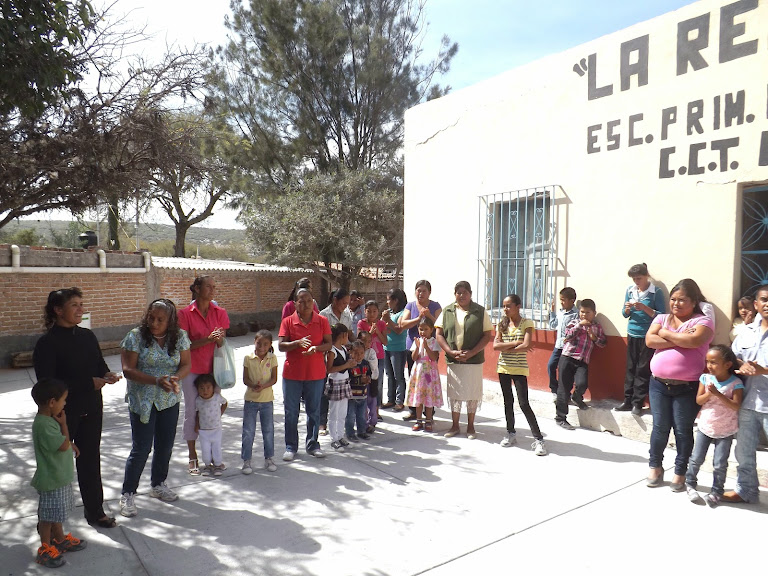
The closing ceremony began about 1:00 pm at the pilot cistern location in Nuevo Rancho de la Banda. There were about 60 persons present including Saul and Chela of CEDESA. There were six person representatives from each of the communities of Ex-Hacienda de Pena Blanca, Presa Allende, Alonso Yanez, and Lindero. All of these communities are hoping to begin projects soon. We will begin in Alonso Yanez and Lindero later this month. 

We had short speeches from each of these communities as well as from Alejandro for Rotary and Chela for CEDESA. Several people from La Banda and Montecillo de Nieto spoke about their experience with this project. Reina from La Banda explained that she was surprised by how hard the work was being that never before had she had to manage a shovel and mix concrete … she is right; it is hard manual labor. Everyone chuckled a bit and said they would be more understanding of their husbands when they came home from working as construction workers. 

Another person from Montecillo reflected that even though the work was hard, it was really fun working together in the groups. The Montecillo spokesperson pointed out that although they have been waiting two years to get the resources for this project that it has been a good experience and they have learned many other important things along the way. 

Finally, after cutting the ribbon to close the project, we got to the real business of the day: lunch. Many persons brought many delicious dishes and we all left full and satisfied.

After lunch Saul and I returned to Vivienda where the pilot cistern is being built. I watched as Saul taught the work teams to form the cone shaped top of the cisterns. I could only admire the way that the materials (wire and reinforcing) have been mineralized to leave not much more than the “oink” as they say. 

Overall it was another great day in the campo and enjoying the fruits of these projects.
Tomorrow we will be taking the Lotus foundation visitors to see the Ex-Hacienda de Pena  Blanca project where there is already a new group asking us to fund a phase II project for them. We will also visit Juan Gonzalez where we have just recently completed 15 cisterns.


Submitted by: Lee Carter, Rotary San Miguel Midday


Wednesday, February 25, 2015

Planning Meeting: Vivienda


February 25, 2014
Attending: Saul (CEDESA), Lee (Rotary) and 11 families from Vivienda
We met today to finalize our Phase II project in Vivienda. Two work teams have been established who will build a pilot cistern at the Secondary School followed by 10 individual family cisterns. Lee will finalize orders with Hierro Comercial for materials and he will deliver the plywood to the project on Saturday morning. Saul will coordinate with Jesus Rico for sand and gravel delivery. 

Veronica R agreed to take overall responsibility for local coordination of the project and Laura Yolanda R will be team leader for Group 1. Maria R  will lead Group 2. An eleventh family was asking for materials to self-build their own cistern but they were not willing to be part of the group work teams. The members voted that to be eligible to receive materials and assistance from Rotary, that working in the teams was an obligation. This is essential to having a successful project and to promote the concept of community development that we hold dear to our hearts.

We reviewed the reason that cisterns are essential (fluoride contamination) and also discussed the important of additional sanitation procedures that should be followed to have the “purest” possible water for their families. We planned out the schedule for this project and made an exhaustive list of tools that would need to be provided during the construction phase. The pilot cistern will be constructed from March 2 to March 6, 2015. 

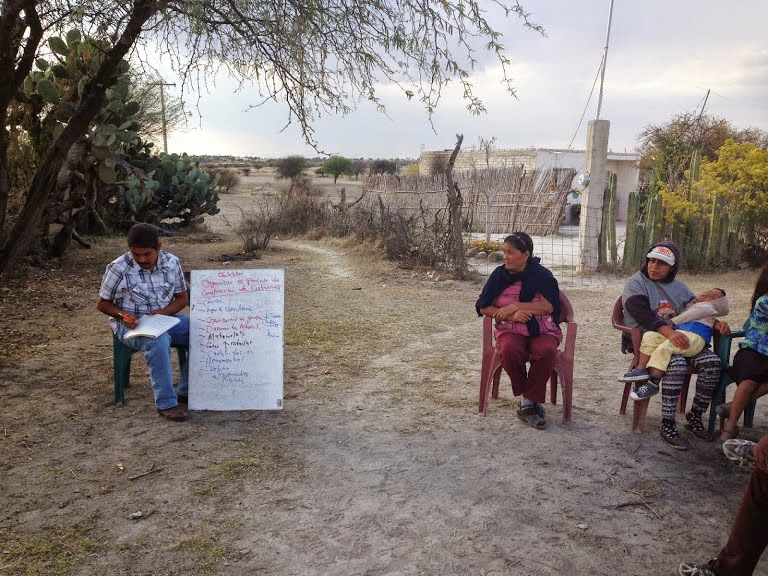
See photo from the planning meeting: Organizing and Procedure for Construction of Cisterns. What is needed? #1 on the list is food. Then training, group organization, a construction assistant for each group, materials, the will to work!, tools, and predefined rules and responsibilities within each group.

Next week five persons from the Lotus Foundation will be visiting San Miguel to see the water harvesting projects in action. The work groups at Vivienda agreed to work on Tuesday in the afternoon to be able to give our visitors a chance to see a pilot cistern being constructed first hand.


Submitted by: Lee Carter


Wednesday, January 28, 2015

Global Grant Update La Banda/Montecillo de Nieto: & Alonso Yanez and Presa Allende: January 27, 2015

La Banda/Montecillo de Nieto: The pilot cistern at the elementary school in La Banda is now complete and the communities of La Banda and Montecillo de Nieto are ready to split into three teams and complete 17 more family cisterns. Hierro Comercial is delivering all the materials today and the other components, gravel, sand, plywood, were delivered last week. It will take about six weeks to complete and we hope to have a grand celebration in the first week or March which is also when we will begin a 12 cistern project in Vivienda.


Alonso Yanez and Presa Allende: I continue to go bi-weekly to the communities of Alonso Yanez and Presa Allende to collect water samples from their wells. CATIS and Rotary are doing a simple study to determine how and if fluoride levels rise over the dry season as the wells are drawn down by the extra water being extracted. We have been doing this since the end of the rainy season and plan to continue until the end of the dry season. Talks with the “pozoleros” (persons that take care of community wells in the communities) have told us that the months of April and May are when the extraction is at its greatest. Alonso Yanez is consistently testing at close to 5 mg/liter for fluoride which is the highest we have seen within our municipality (water levels above 1.5mg/litre may have long-term undesirable effects**read more about fluoride here).

We will be building about 46 cisterns in Alonso Yanez and the adjacent community, Lindero, in April 2015.

Submitted by Lee Carter, Rotary San Miguel Midday

Saturday, January 24, 2015

Juan Gonzalez - Inauguration January 24, 2015


Alejandro Guerra, David Hartman and I traveled to the wonderful community of Juan Gonzalez today to celebrate the completion of another successful water harvesting project. Sixteen cisterns were constructed by three workgroups and 4 water harvesting systems were installed using pre-fabricated plastic cisterns at homes where the owners did not have enough roof to collect water for a 12,000 liter cistern.
This is the second phase of water harvesting in Juan Gonzalez. About one-half of the community’s families now have safe potable water. This is one of the most organized communities that I have observed. The process of working together to accomplish a better life for all is becoming a part of their daily vocabulary. In addition to two cistern projects through Rotary, they have also worked together on developing backyard gardens, dry toilets and testing and adopting water filtration disinfection through CATIS.
We began by having an assembly where many of the people spoke passionately about what has been accomplished and what could be in the future. Saul Jaurez of CEDESA spoke about the success and the hard work that these people put in through COCIRA to become eligible for project funding. After this we all took a walk through the community to see the new built cisterns and also we had a chance to note that the cisterns from the first project of a few years ago are being very well maintained. Many of the new cisterns have been “decorated” with interesting statues at the top of the cone … everything from cats to Cristo Rey and in between.
After a ribbon cutting ceremony at the pilot cistern, we all returned to the elementary school for a diverse and delicious meal cooked by the members of the community. I look forward to more work in this community in the future.
Submitted by: Lee Carter, Rotary San Miguel Midday


Thursday, October 30, 2014

Juan Gonzalez Site Visit – Pilot Cistern

Today Tony DeCrosta and I traveled to the Juan Gonzalez to check on the progress of the pilot cistern and to arrange the delivery of the rest of the materials for that project which consists of 16 cisterns and 4 Rotoplast installations. 

We had been informed by the community that they wanted us to try to deliver the balance of materials, especially the chicken wire so they could begin the weaving of the wires to form the cylinders.

After a bit of confusion in getting to Juan Gonzalez we finally arrived. Juan Gonzalez is definitely “over the hill and through the woods”. It is about four miles off of the main highway down an unmarked road and across a seasonal river that had been unpassable only a few weeks ago. 

We arrived to find the pilot proceeding exceptionally well. The final plastering was being done on the inside of the cistern under the guidance of our teaching construction worker, Filiberto. They planned to put on the top cap later in the day. 


There were about 8 women and 2 men working and offering much advice to me as well. It is a lovely group of people with good humor and great pride in what they are accomplishing. Consistently it is the women who do the bulk of the work in these projects.


Upon arriving I determined that I had gotten confused over the total number of cisterns being built and had arranged the deliver for 14 more cisterns when, in fact, there are 15 more to be built. Fortunately I was able to reach Hierro Comercial to have them load the additional materials on the delivery truck. Hierro Comercial sent out the delivery truck late today.

Upon leaving as we were going down the four wheel access only road we "ran into" three woman carrying a very heavy cooler loaded with freshly made tamales. I stopped and offered them a ride and they said they were happy to be walking and they were taking the tamales down to the school to feed the kids. They eagerly offered us a few tamales which we more eagerly accepted. A beautiful and delicious finish to a beautiful day in the community of Juan Gonzalez.

This project includes the installation of four Rotoplast (prefabricated cisterns of 1,100 liters each) in Juan Gonzalez. This happens at times for older persons, generally living alone who cannot physically participate in the cistern construction but who have participated fully in the community’s organization for the project. 

Most times, they are also living in a house that has a roof too small to collect enough order over the rainy season to fill our standard 12,000 liter cistern. In Juan Gonzalez, three prefabricated cisterns have been included in the project for this reason. 

At Juan Gonzalez there is a fourth Rotoplast for a member of the community that will participate fully in the construction process but who plans to move houses in about one year. Thus, portability of the cistern is necessary and after much discussion by the project participants we decided this was the best alternative available to handle that situation. The Rotoplast and PVC materials cost $1,900 pesos vs $5,700 for a typical cistern.


Reported by Lee Carter, Rotary San Miguel Midday.

Tuesday, October 28, 2014

La Banda / Montecillo de Nieto - Pre-Project Planning Meeting -

Tony DeCrosta (Rotary), Saul Juarez (CEDESA) and I traveled to La Banda today to get the second project started for our Global Grant 1422619. The pilot cistern in Juan Gonzalez is being completed this week.

We met at the community center in La Banda. After introductions of everyone in attendance, we talked about the process that had been followed by the persons in these two communities to finally come to the top of the list of those waiting for the Rotary water harvesting project. 

The families involved have done other projects through CEDESA and COCIRA during these two years which included dry toilets, stoves to replace open fire cooking, backyard gardening, and bee keeping. I asked about why they wanted to build cisterns and, in addition to concerns about fluoride contamination, they discussed water quality as it related to the obligatory chlorination of the SAPASMA well.

Next we discussed the importance of viewing this project not as a onetime event to work together, but part of a lifelong process of teaming up to make permanent and sustainable change in their community. This project is just one more step toward improving many aspects of their lives through their own initiative. Water without contaminants is just one step to improving health. Nutrition, relationships, cooperation, and mutual assistance by capitalizing on individual’s strengths are some of the future steps to be considering.

It was decided that the pilot training cistern would be built at the Primary School in Rancho Nuevo La Banda as it is equidistant between La Banda and Montecillo de Nieto. Saul reviewed with the participants their obligations by being a part of this project: 1. Participation in the construction of the pilot is mandatory. 2. Each group must have a qualified construction worker (albanil) on their team. 3. They must form work groups and help build all cisterns within their group. Building the cistern independently by the family only, is not allowed.

In Montecillo de Nieto, there are 8 families and they will all work together as one group. That group consists of: Hilaria Ramirez who is the person responsible for the overall communication within this group and with CEDESA and Rotary as needed. Her telephone number is 415.xxx.3273. Ana Gabriela Jiménez Jimenez is the “second” responsible and her telephone number is 415.xxx.7486. The rest of the group are Liliana Jimenez Damian, Alejandra Morales Jimenez, Angelica Jimenez Jimenez. Fabiola Pastor Ramirez, Maria Cruz Jiménez Balthazar, and Mayra Mirela Pastor Blanca. They will report next week, who will be the albanil to work with them.

In La Banda we will be building 10 cisterns in addition to the pilot cistern. (Total for this mini-project is 19 cisterns.) The Banda group will divide into two work teams as follows. Ma. De los Angeles Ramirez Vasquez was elected to be the overall responsible person in coordinating La Banda. Her phone number is 415.xxx.7246.
Group 1: Reina Ramirez Vasquez, group leader (phones: 415.xxx.0206 and 415.xxx.9420). The rest of the group includes Ma. Carmen Vásquez Ramirez, Concepción Vásquez Caporal, Ma. Elena Ramirez Vásquez and Maria de los Angeles Ramirez Vásquez. The albañil to work with the group is Marcario Ramirez Robles.
Group 2 consists of Ines Ramirez Pastor, responsible with no phone but borrowing the phone of Francisca Ramirez Blanca 415.xxx.3608. The rest of the group includes Carolina Ramirez Ramirez, Ma. Anna Gonzalez Ramirez and Catalina Ramirez Pastor. The will inform us who will be the albanil at the next meeting.

Following this we discussed the timing of this project relative to the upcoming harvest and Christmas obligations. I had been informed this morning that our primary supplier, Hierro Comercial of Dolores Hidalgo, would not be able to receive the special order chicken wire required for the cisterns until the first week in December. They had also called around to many other distributors to see if they could get the wire elsewhere with no luck. Getting this wire has always been a big challenge in our past projects. 

Hierro Comercial is delivering the balance of materials to Juan Gonzalez this week and they said if there was sufficient wire to do the pilot in La Banda that they would deliver those materials. It turns out that there is not additional wire available at this time.
After much discussion, it was decided that unless the wire could be available within 15 days that it would be better to wait to begin the project until after Three Kings Day on January 6, 2015. ie since the wire is not available, we will wait to begin in January of next year.

I have subsequently talked with Hierro Comercial and I will be providing them with a list of communities and estimated number of cisterns that will be built in early 2015. If there will be a price increase in any of the materials, particularly we normally have price increases in the wire, we will look into pre-paying for those materials so that Hierro Comercial can stock pile the materials in December to be used in January through March of 2015. Hierro Comercial has been the provider of 90% of the materials over the past 7 years and proven themselves to be a trustworthy partner in these projects. Because of that long standing relationship, I am comfortable that prepaying for materials to avoid price increases is a good decision in maximizing our use of funding for this project.
Following the meeting, we had a nice late lunch provided by the members of the La Banda group.

Reported by Lee Carter, Rotary San Miguel Midday